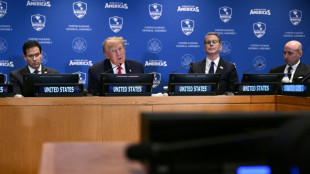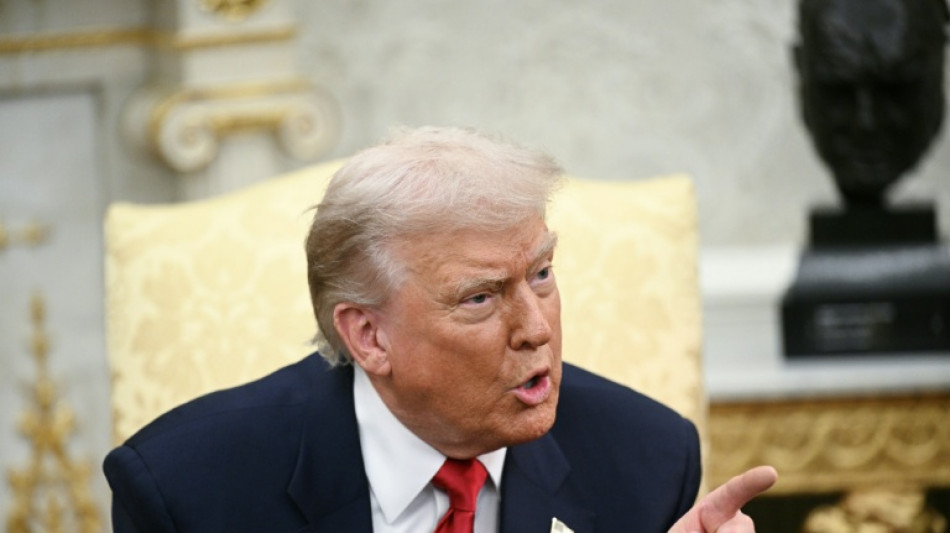
Allies tepid on Trump 'Board of Peace' with $1bn permanent member fee / Photo: Brendan SMIALOWSKI - AFP
 18°C
18°C

Key allies reacted coolly Monday to US President Donald Trump's invite to pay $1 billion for a permanent spot on his "Board of Peace" for resolving international conflicts, with analysts likening it to a pay-to-play version of the UN Security Council.
The White House has asked various world leaders to sit on the board, chaired by Trump himself, including Russian President Vladimir Putin, Hungarian premier Viktor Orban and Canadian Prime Minister Mark Carney.
The board's charter, seen by AFP, says that member countries will serve no longer than three years, subject to renewal by the chairman. That is unless they "contribute more than USD $1,000,000,000 in cash funds to the Board of Peace within the first year of the Charter’s entry into force."
The initial reaction from two key allies, France and Canada, was lukewarm.
"At this stage, France cannot accept," French Foreign Minister Jean-Noel Barrot said Monday during a debate with French lawmakers, noting that the board's charter goes beyond the scope of rebuilding and running post-war Gaza endorsed by the United Nations.
He added that it is "incompatible with France's international commitments and in particular its membership in the United Nations, which obviously cannot be called into question under any circumstances."
France is one of the five veto-wielding, permanent members of the UN Security Council, along with the United States, China, Russia and Britain.
A Canadian government source said Ottawa will not pay to be on the board, and hasn't gotten a request to pay, after Prime Minister Mark Carney indicated he would accept an invitation to join.
Paul Williams, professor of international affairs at George Washington University, told AFP that the offer of permanent membership for $1 billion showed Trump is "trying to turn it into a pay-to-play alternative to the UN Security Council but where Trump alone exercises veto power."
The charter, which in fact does not mention Gaza, describes the board as "an international organization that seeks to promote stability, restore dependable and lawful governance, and secure enduring peace in areas affected or threatened by conflict."
- 'Failed institutions' -
The charter appears to take a swipe at the United Nations, saying that the new board should have "the courage to depart from approaches and institutions that have too often failed."
Trump has regularly criticized the United Nations and announced this month that his country will withdraw from 66 global organizations and treaties -- roughly half affiliated with the UN.
The world body -- which suffers chronic funding shortfalls and political deadlock in the Security Council -- pushed back Monday.
La Neice Collins, spokesperson for the president of the UN General Assembly, told reporters "there is one universal, multilateral organization to deal with peace and security issues, and that is the United Nations."
Daniel Forti at the International Crisis Group, a think tank, said at least 60 countries have reportedly been invited to the Board of Peace. He said some may view it as a way to curry favor with Trump, but many member states would see it as power grab.
"Actively buying permanent seats in an exclusive club sends a very worrying signal about what transactional and deals-based international diplomacy may mean in the future," he told AFP.
Trump would have the power to remove member states from the board, subject to a veto by two-third of members, and to choose his replacement should he leave his role as chairman.
Ian Lesser at the German Marshall Fund think tank told AFP he would be surprised if many countries are willing to sign up "at a time when most are focused on preserving the existing multilateral institutions."
The White House said there would be a main board, a Palestinian committee of technocrats meant to govern devastated Gaza, and a second "executive board" that appears designed to have a more advisory role.
Trump has named as board members Secretary of State Marco Rubio, former British prime minister Tony Blair, senior negotiator Steve Witkoff and his son-in-law Jared Kushner.
Israel has objected to the line-up of a "Gaza executive board" to operate under the body, which includes Turkish Foreign Minister Hakan Fidan and Qatari diplomat Ali Al-Thawadi.
M.P.Huber--MP