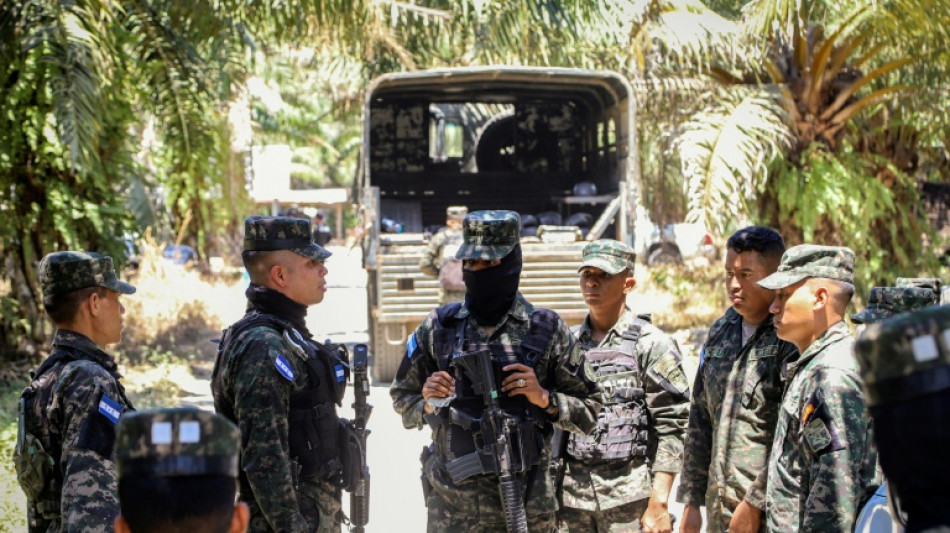
Organized criminals kill at least 25 in Honduras / Photo: STRINGER - AFP
 8°C
8°C

Organized criminals killed at least 25 people, including civilians and police officers, Thursday in two attacks in northern Honduras, authorities said, as the Central American nation prepares a crackdown on crippling gang violence.
The deadliest attack took place at dawn in the municipality of Trujillo in Colon department, where 19 people were shot dead with long guns in an area riven by gang turf wars over a palm plantation and drug trafficking routes, authorities said.
In a separate attack near the Guatemalan border in Omoa, in Cortes department, national police reported five officers and one civilian were killed in a clash between an anti-drug squad and alleged traffickers.
The attacks come after the national legislature approved a series of reforms to confront criminal violence in Honduras, where the homicide rate is 24 killings for every 100,000 inhabitants.
The new measures authorize the military to participate in public security tasks and create a new anti-organized crime unit. It also opens the possibility of categorizing gangs and drug cartels as terrorist groups.
Honduras's new conservative president Nasry Asfura has vowed to work with his US counterpart Donald Trump to crack down on organized crime in Latin America.
- 'Dante-esque' -
The dead in Trujillo were employees of an armed group that controlled a plantation, a local rural group leader told AFP by phone.
The leader, who requested anonymity for security reasons, said local residents heard widespread gunfire.
Frequent threats from armed groups mean "one sleeps with one eye open and another closed," the person said.
A local news outlet shared a video showing at least nine bloodied bodies scattered through the vast palm plantations.
"For now, what you can see (in the images) is a Dante-esque scene where various people were apparently executed with high-caliber weapons, probably rifles and shotguns," Security Minister Gerzon Velasquez told reporters.
Yuri Mora, a spokesperson for the prosecutor's office, told local television that teams at the plantation had discovered 13 people in one area and six in another.
Velasquez said the killings took place in an area "in conflict for many years" due to the activity of armed groups involved in narcotrafficking and palm oil extraction.
Trujillo police chief Carlos Rojas told local media that the groups occupy and illegally exploit several large African palm plantations, using money from the crops to obtain weapons.
Local farmer groups, however, accuse transnational agribusiness corporations of sponsoring the criminal groups to carry out land occupations and prevent residents from reclaiming disputed lands.
A senior government investigator, speaking to AFP on condition of anonymity, dismissed the idea that the massacre was over a land dispute.
"This has to do with drug trafficking," the official said.
O.Braun--MP