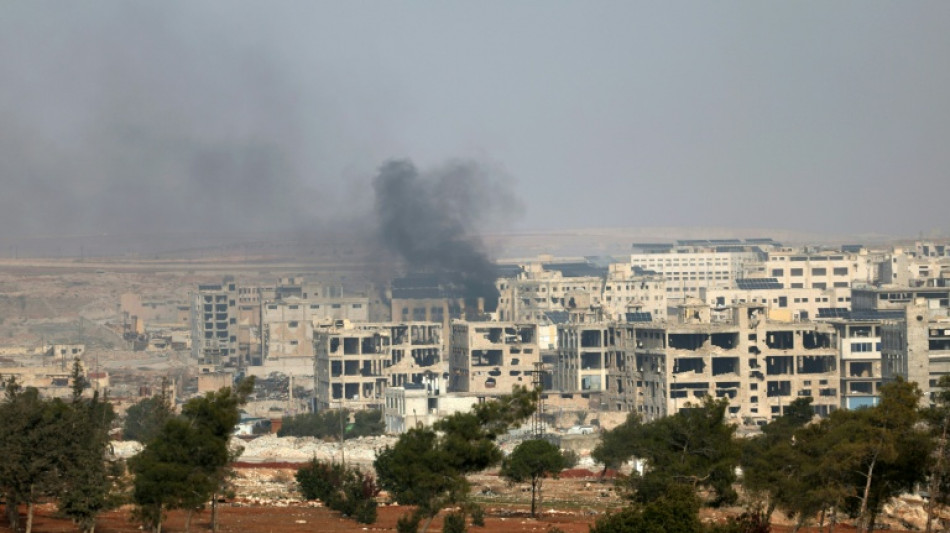
Syria bombs Kurdish areas in city of Aleppo / Photo: OMAR HAJ KADOUR - AFP
 27°C
27°C

Syria's military began heavy bombardment of Kurdish neighbourhoods in the city of Aleppo on Thursday after warning civilians to leave on a third day of fighting.
The violence is the worst in Aleppo since Syria's Islamist authorities took power and comes as implementation stalls on a deal to integrate a Kurdish administration in the country's northeast into the new government.
The fighting has also highlighted regional tensions between Turkey, which says it is ready to support Syria's authorities, and Israel, which condemned what it described as attacks against the Kurds.
"We've gone through very difficult times... my children were terrified," said Rana Issa, 43, whose family fled Aleppo's Ashrafiyeh neighbourhood under sniper fire.
"Many people want to leave" but are afraid of the shooters, she told AFP.
Thousands of people have been displaced since the violence erupted on Tuesday between the army and Kurdish-led forces in the Sheikh Maqsud and Ashrafiyeh neighbourhoods, leaving around 17 people dead.
State news agency SANA, citing a military source, said the army launched "intense and concentrated bombardment towards SDF positions" in the two areas on Thursday, referring to the Kurdish-led Syrian Democratic Forces.
Flights remain suspended at Aleppo airport, while AFP correspondents said shops, universities and schools were closed for a second day. Civilians fled the two Kurdish-majority neighbourhoods via safe corridors while soldiers searched the men.
- Turkey, Israel -
The government bombardment resumed after an afternoon deadline passed for civilians to leave. The army published maps showing areas it said Kurdish forces were using to shell other parts of Aleppo.
The European Union, whose top officials are due to visit Syria on Friday, voiced "great concern" and called on "all sides to exercise restraint, protect civilians and seek a peaceful and diplomatic solution".
Neighbouring Israel and Turkey are on opposite sides of the conflict and have been vying for influence in Syria since the December 2024 toppling of longtime ruler Bashar al-Assad.
A Turkish defence ministry official said his country "supports Syria's fight against terrorist organisations" and that "should Syria request assistance, Turkey will provide the necessary support".
Foreign Minister Hakan Fidan said Turkey, a close ally of the new Syrian government, had been locked in "intensive consultations" with Damascus and the United States to resolve the deadlock, which he blamed on the SDF's "uncompromising stance".
Turkey, which shares a 900-kilometre (550-mile) border with Syria, has launched successive offensives to push Kurdish forces from the frontier.
Israeli Foreign Minister Gideon Saar meanwhile said that "attacks by the Syrian regime's forces against the Kurdish minority... are grave and dangerous", warning that the violence could increase if the international community remained silent.
Israel and Syria are in talks to reach a security agreement and this week agreed to establish an intelligence-sharing mechanism.
Israel bombed Syrian government forces in July when they clashed with the Druze community in the country's south, saying it was acting to defend the minority, who are also present in Israel.
- 'No to war' -
The US-backed, Kurdish-led SDF controls swathes of Syria's oil-rich north and northeast, and was key to the territorial defeat of the Islamic State group in Syria in 2019.
The March agreement on its integration into the state was to be implemented by the end of 2025, but differences between the sides including Kurdish demands for decentralised rule have stymied progress.
Sheikh Maqsud and Ashrafiyeh have remained under the control of Kurdish units linked to the SDF, despite Kurdish fighters agreeing to withdraw from the areas in April.
Aron Lund, a fellow at the Century International research centre, told AFP that "Aleppo is the SDF's most vulnerable area".
But "this isn't an all-out conflict just yet. Both sides are still trying to put pressure on each other and rally international support for their own position," he said.
He warned that without even a temporary deal, "there's a risk that this will spiral into something much worse".
"A full Damascus-SDF conflict across northern Syria, potentially with Turkish and Israeli involvement, could be devastating for Syria's stability," he added.
UN Secretary-General Antonio Guterres on Wednesday urged both sides to show restraint and swiftly resume negotiations on the March agreement.
In the city of Qamishli in Syria's Kurdish-held northeast, hundreds of people demonstrated on Thursday against the Aleppo violence, AFP correspondents said.
"We call on the international community to intervene," said protester Salaheddine Cheikhmous, 61.
Others held banners that read "no to war" and "no to ethnic cleansing".
S.Schuster--MP