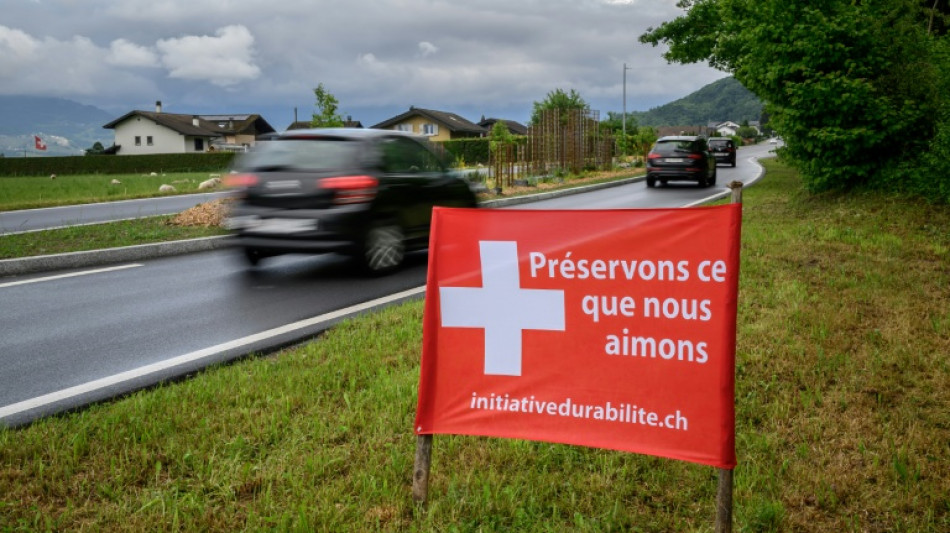
Swiss divided as population cap vote nears / Photo: Fabrice COFFRINI - AFP
 3°C
3°C
The Swiss will vote next month on an initiative to cap the population at 10 million -- an anti-immigration proposal that is fracturing public opinion in the wealthy Alpine nation.
"No to a Switzerland of 10 million inhabitants," is the name of the project launched by the country's biggest party, the hard-right Swiss People's Party (SVP), renowned for its opposition to immigration and closer ties with the European Union.
The initiative's backers maintain that Switzerland, with its 9.1 million people, is buckling under the burden of "mass immigration", calling for a strict population cap.
Most other political parties, the Swiss government and parliament are urging voters to reject the initiative on June 14, warning of disastrous consequences.
Recent opinion polls suggest the two sides are neck and neck.
Those behind the initiative blame immigration for a host of problems in Switzerland, including housing shortages, rising rents, overdevelopment, traffic jams and overcrowded trains, as well as increased crime and a strained healthcare system.
To fix the problem, they want to "limit immigration to a reasonable level" and ensure the population goes no higher than 10 million before 2050.
Official Swiss statistics indicate that the country's population is on track to hit 10.5 million by 2055.
- Implications for EU relations -
The SVP-led proposal says that if the population surpasses 9.5 million before 2050, the Swiss authorities would have to take a first set of steps, notably in the areas of asylum and family reunification.
And if the population still hits 10 million before 2050, Switzerland must, after two years, terminate its freedom of movement agreement with the surrounding EU, of which it is not a member.
This is a red line for many, as it would mean the agreements signed with Brussels in 1999 and 2004 -- which allow Switzerland broad access to the European single market -- would become obsolete.
A so-called guillotine clause means that denouncing one pillar of the deal brings the whole agreement down.
"Switzerland's participation in the EU's Schengen and Dublin agreements would also be called into question, thereby jeopardising close cooperation in the areas of security and asylum," warns the government, which is recommending a No vote.
- No 'miracle solution' -
The proposal has sparked widespread opposition across the rest of the Swiss political spectrum.
The Greens call it an "anti-foreigner" move; the Socialists brand it a "chaos initiative", while the centrists call it a "superficial solution".
"I can understand that some people -- wrongly in my opinion -- consider ending the free movement of people a miracle solution," said Cyril Aellen, vice-president of the centrist FDP.The Liberals, the third-biggest party in Switzerland.
"But breaking all the agreements with Europe seems totally counterproductive to me," he told AFP.
Furthermore, the SVP "underestimates the very real negative consequences of a demographic slowdown", he added.
"We will have to completely rethink our pension system... This also means that our social welfare systems will need to be more heavily funded. There will therefore be a very significant impact on the cost of living."
Switzerland's German-speaking cantons are generally more in favour of immigration restrictions, while the French-speaking west is more at ease with the EU agreements.
To pass, the initiative needs both more than 50 percent of the vote and more than half of the cantons.
- Foreign population 27% -
A recent study by the University of Geneva found that the reduction in the working-age population resulting from the reform "would have negative macroeconomic effects in a context of structural labour shortages and demographic ageing".
Foreigners made up 27.4 percent of the Swiss population at the end of 2024.
Since the introduction of the free movement of people in 2002, the population has grown by around 1.7 million -- mainly due to immigration, says the government.
Sectors heavily reliant on foreign labour include the hotel and restaurant industry (46 percent foreign employees, not including cross-border workers) and construction (34 percent).
According to the university study, these sectors "would suffer the effects of a labour shortage that would be difficult to compensate for", with the notable exception of border regions.
The SVP has already made headlines with successful initiatives banning minarets and the burqa, adopted in 2009 and 2021 respectively.
In 2014, the Swiss also approved an SVP initiative reintroducing quotas for migrants, particularly from Europe, but the party believes that Bern has not implemented it fully.
G.Murray--MP