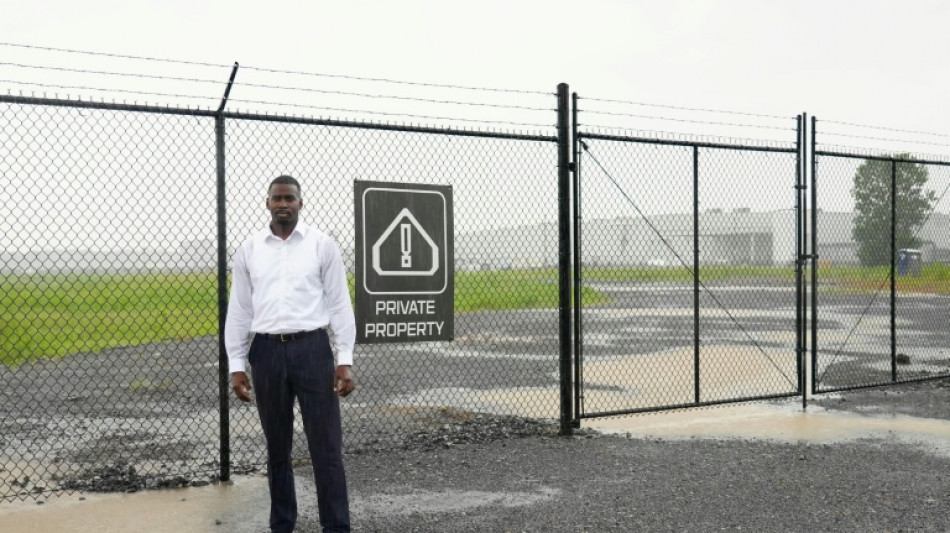
Memphis AI data center fuels pollution fight in Black neighborhood / Photo: Archana THIYAGARAJAN - AFP
 26°C
26°C
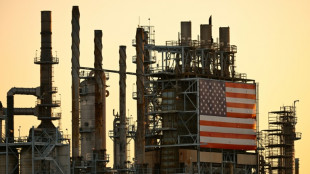
The stench of rotten eggs and burning debris fills the air in Boxtown, a predominantly Black neighborhood in Memphis. Just a few miles away, a power plant fuels one of SpaceXAI's data centers, which are popping up all over Tennessee.
Hastily built to meet skyrocketing demand for computing power required by the global artificial intelligence race, these data centers are facing opposition across the United States.
Teenager Jasmine Bernard, who lives in a neighborhood bordering Boxtown, has been fighting for two years against the gas turbines that power the data center and spew emissions into the air.
The people of South Memphis have suffered through years of pollution from factories in Boxtown, founded by freed slaves after the Emancipation Proclamation of 1863.
The risk of developing cancer here is four times higher than the national average.
"This community of Boxtown and South Memphis as a whole historically just has been the subject of environmental neglect," the 17-year-old Bernard told AFP. "It's deeply tied to the history... it's been a Black community for centuries."
KeShaun Pearson, co-founder of Memphis Community Against Pollution, has been criss-crossing the country to raise awareness about the environmental dangers of data centers and speak about Boxtown, which he says has been abandoned by local officials.
Pearson says Colossus I, the name of SpaceXAI boss Elon Musk's first mega AI supercomputer facility is "a textbook case of what it looks like when elected officials make promises about economic mobility."
"They don't listen or involve the community or the people who are going to be directly impacted," he said.
Behind him, a sign on a fence reads "Private Property." In the distance lie, about 10 turbines and vast warehouses filled with Nvidia graphics processing units (GPUs).
Anthropic is now leasing the entire facility for more than $1 billion a month.
SpaceXAI, which did not respond to a request for comment, said in a statement that it is working to make sure that its mobile turbines are "equipped with advanced emission control technologies."
"Current monitoring shows that local air quality continues to meet or exceed EPA standards," the company said, referring to the Environmental Protection Agency's rules.
- Noise pollution -
But air pollution is not the only issue.
Every day, Colossus I pumps 1.2 million gallons (4.5 million liters) of groundwater from the aquifer that supplies Memphis with drinking water to cool its supercomputer, warns Sarah Houston from the group Protect Our Aquifer.
SpaceXAI promised that it would build a water reuse facility, but that project has been suspended.
It only took four months to build Colossus I, which generated $12 million in tax revenue, according to 2026 data.
Memphis Mayor Paul Young recently announced a project that would redirect $3.35 million of that money to affected communities.
A similar strategy has been adopted in neighboring Mississippi.
There, in Southaven, 69 turbines are constantly in motion to fuel Colossus II, built to train SpaceXAI's AI-powered assistant Grok.
But the pine trees lining Krystal Polk's home, in her family for generations, don't protect her from the data center's deafening drone, which sounds like a jet that never takes off.
"The noise is 24/7," Polk told AFP. "If you're out here too long, the vibrations -- that wave sound makes you nauseous."
- 'Illegal turbines' -
Advocacy groups and experts say that by erecting turbines without a permit or any public consultation, SpaceXAI has disregarded existing legislation such as the Clean Air Act.
Under that law, "before you even start constructing the plant, you have to have the permit in hand that ensures the health and safety of the surrounding communities," says Laura Thoms, from the nonprofit Earthjustice, which is representing the civil rights group NAACP in its suit against SpaceXAI.
"Here, the company did not want to wait to get the permit. So what they did is they put these illegal turbines on site while at the same time going through the permitting process, so that they didn't have a power gap," Thoms said.
SpaceXAI has always referred to the turbines as "temporary," thereby skirting environmental regulations.
In late July, the company said it would dismantle them and replace them with a power plant that is up to code.
But the deal, which opponents say was negotiated behind closed doors with local officials, gives the firm until July 2027 to complete the work.
In June, the Justice Department asked that the NAACP's complaint be thrown out, citing national security matters.
A third data center has been built near Colossus II, and a fourth is under construction. Residents and pressure groups say they have not been informed how those facilities will be powered.
In 2021, Boxtown residents successfully lobbied for a pipeline project to be scrapped. They hope to lead a similar campaign against any more data centers.
G.Vogl--MP