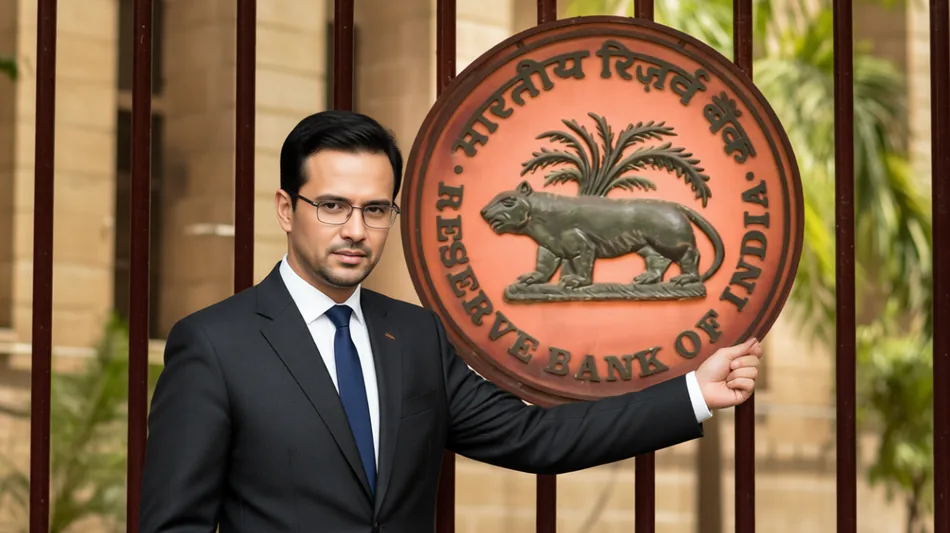
RBI Data Reveals Divergence in Credit Card Spending and Debit Card Cash Withdrawals

The Reserve Bank of India’s latest data reveals a distinct divergence in payment behaviors: while credit card spending is increasingly shifting toward online channels, debit cards remain predominantly used for cash withdrawals. In September 2026, India held over 125 million credit cards and more than 1 billion debit cards, yet the utility of these instruments differed significantly across digital and physical transaction types.
The Reserve Bank of India’s (RBI) September 2026 card statistics reveal a sharp divergence in consumer payment behaviors, highlighting that while credit card usage is increasingly digital, debit cards remain primarily instruments for cash access. At the end of the month, India held 12.53 crore outstanding credit cards and 103.97 crore debit cards. The data indicates that credit card holders favored online purchases over point-of-sale (PoS) transactions, whereas debit card users relied heavily on automated teller machines (ATMs) for cash withdrawals rather than direct payments.
According to the RBI’s provisional data, credit cards facilitated 30.79 crore online purchases in September, totaling approximately Rs 1.26 lakh crore. In comparison, PoS terminals recorded 29.82 crore transactions worth about Rs 77,751 crore. Although the volume of transactions was similar between the two channels, the monetary value of online credit card spending was roughly 1.6 times higher than that of in-store purchases. The central bank also reported an "Others" category for credit-card payments, comprising 40,54,757 transactions worth Rs 112.05 crore, alongside 6,62,921 cash withdrawals at ATMs totaling Rs 382.74 crore.
Debit card usage patterns presented a contrasting picture. The RBI recorded 7.07 crore PoS purchases worth about Rs 20,704 crore and 2.60 crore online purchases valued at approximately Rs 13,126 crore. However, the primary function of debit cards remained cash access. Debit cards were used for 39.83 crore cash withdrawals at ATMs, totaling about Rs 2.19 lakh crore. This withdrawal volume was nearly four times the combined number of debit-card purchases, underscoring that a large base of outstanding debit cards does not necessarily correlate with frequent use for purchasing goods or services.
The RBI distinguishes these monthly transaction figures from its month-end counts of outstanding cards and acceptance infrastructure. As of September 2026, the country had 88.55 crore UPI QR codes, 53.40 lakh Bharat QR codes, and 1.04 crore PoS terminals. The central bank noted that outstanding card figures represent the number of active cards rather than unique individuals or total transaction values, as a single person may hold multiple cards.
Comparing September data with August 2026 figures provides context for these trends. Outstanding credit cards had risen to 12.405 crore in August from 11.234 crore in August 2025. Credit card spending in August totaled approximately Rs 2.02 lakh crore, with Rs 79,355 crore at PoS and Rs 1.23 lakh crore online. In September, total credit card spending remained stable at roughly Rs 2.04 lakh crore, driven by a rise in online spending to Rs 1.26 lakh crore despite a slight decline in PoS spending to Rs 77,751 crore.
Debit card ATM withdrawal values also saw a decrease from August to September. Withdrawals using debit cards were approximately Rs 2.24 lakh crore in August and dropped to Rs 2.19 lakh crore in September. This consistency in high-volume cash withdrawals suggests that cash remains a primary mode of transaction for many users, despite the proliferation of digital payment options.
The data also highlights the dominance of the Unified Payments Interface (UPI) in the Indian payment ecosystem. In September, UPI processed 24.07 billion transactions worth Rs 29.37 trillion, marking a 23% year-on-year increase in transaction volume. The trend accelerated further in October 2026, when UPI transaction value reached a record Rs 31.53 lakh crore, driven by festive season spending. This rapid growth in UPI adoption underscores the shifting landscape of payment preferences in India, where digital instant payments are increasingly competing with traditional card-based systems.
G.Vogl--MP