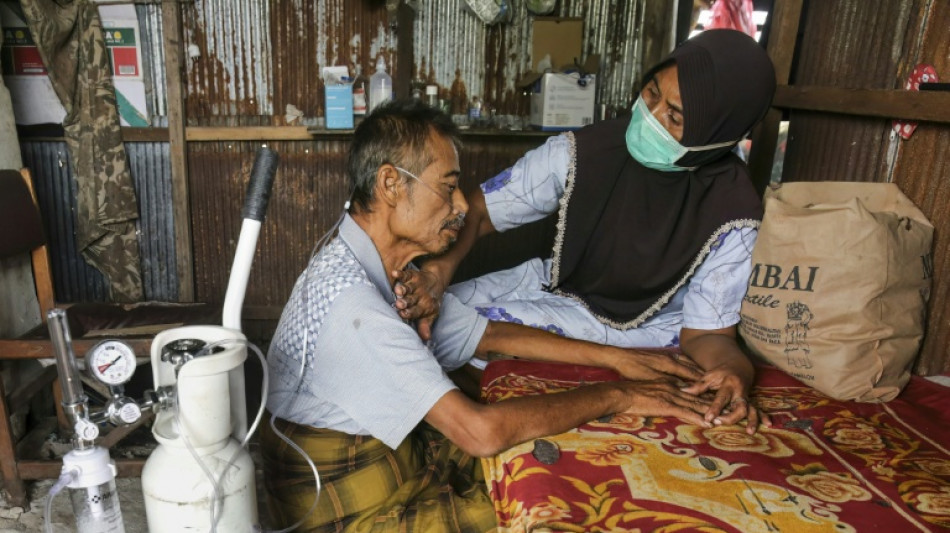
Gasping for air: Borneo residents struggle as island burns / Photo: REINA - AFP

Sudarsono shuddered as he inhaled from an oxygen tank while being evacuated from his small house in Palangkaraya on Indonesian Borneo, yellow, acrid wildfire smoke billowing all around.
The 57-year-old fell sick after going out with three friends days earlier to fight fires creeping closer to homes on the outskirts of the city in Central Kalimantan province, one of the regions hit hardest by months of blazes and haze.
"I wore a mask, goggles, everything, but I was surrounded by smoke. I went home since I couldn't take it anymore," the construction worker and farmer told AFP as he was being loaded into an ambulance to go to hospital last week.
Sudarsono's backyard had been blackened by flames, with only a few tree stumps and a cloying smoke left.
"I hope that there will be no more haze, that Central Kalimantan will be free from fires so people can feel safe, work and earn a living," Sudarsono said before the ambulance doors closed.
He is among more than 11,000 people treated for respiratory infections in Palangkaraya during a months-long wildfire crisis that has also affected Indonesia's neighbours with toxic haze pollution.
More than 300,000 people in seven provinces were laid low by respiratory tract infections from August to October, according to Indonesia's health ministry.
At a nearby shelter run by NGOs in Palangkaraya, Alexandra Surya Habsari was treated with a nebuliser and oxygen for breathing difficulties and a headache.
"I'm really fed up, but I don't even know who I'm supposed to be angry with... this is already way beyond what can be considered normal for a human being to endure," Alexandra told AFP.
The toxic smog emitted by wildfires contains harmful elements including formaldehyde, hydrogen cyanide and ammonia, as well as PM2.5 particles small enough to penetrate the lungs or bloodstream.
The World Health Organization has linked PM2.5 exposure to increased illness and death.
- Breathing 'poison' -
The Southeast Asian giant has for months struggled to contain fires that deforestation monitor Nusantara Atlas says have consumed more than 1.9 million hectares in the nine months to September.
The government has not confirmed or disputed the figure.
Amid diplomatic objections from neighbouring countries forced to breathe the foul air, patience has also been running thin at home, marked by sporadic anti-government protests.
The health ministry said it has set up nearly 500 facilities countrywide where people can access free oxygen and treatment for haze-related ailments.
Nearly 300 of them are in Central Kalimantan, where the fires and the haze have been particularly bad.
The local government has also deployed buses with oxygen tanks around Palangkaraya.
One beneficiary, Siti Jumiati, said he had long been battling red, burning eyes, a sore throat and a cough.
"Today, on this bus, I can get help breathing for free," he told AFP on Saturday.
Local health official Riduan, who like many Indonesians has one name, said the people most affected by respiratory ailments were aged between 17 and 59 -- those who go out to work even in the toxic air.
Alexandra, 43, said her daily 20-minute commute to the office has become torture.
"We're supposed to be able to see the blue sky, breathe in oxygen, see the sun and enjoy clean air. But when it's like this, what we're breathing is poison," she said.
Y.Hube--MP