Whale Watching Tour Near the Farallon Islands Reveals Harsh Ocean Conditions

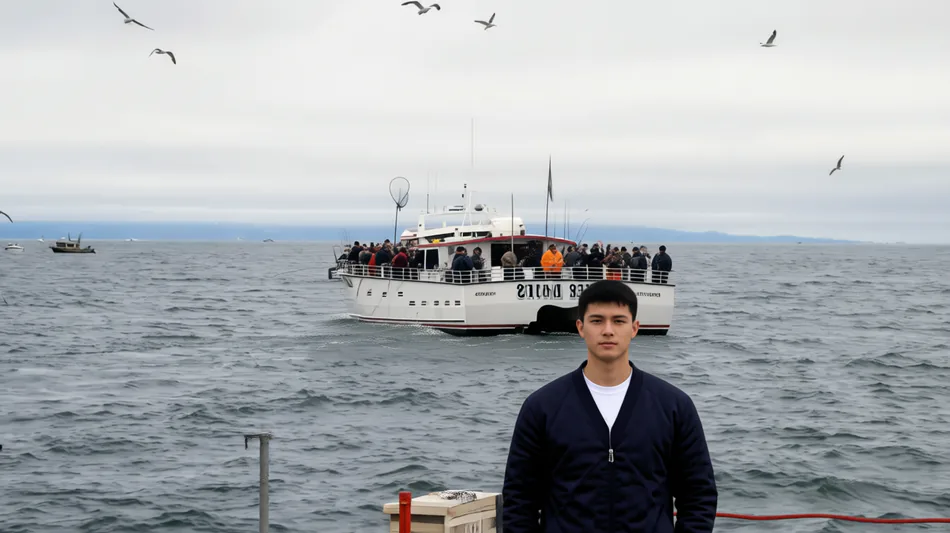
A journey to the Farallon Islands aboard the vessel Salty Lady revealed the stark contrast between the rugged, bird-covered rocks and the open Pacific. The tour offered close encounters with harbor seals and whales amidst heavy fog and rough seas, underscoring the remote nature of this critical wildlife habitat.
The Farallon Islands, a cluster of jagged rock formations located approximately 27 miles off the coast of San Francisco, remain one of the most inaccessible and ecologically significant sites in the Pacific. A recent voyage to these protected islands aboard the vessel Salty Lady provided a rare glimpse into the harsh conditions that define this marine sanctuary, where thousands of seabirds thrive in isolation.
The expedition began at the Marina Yacht Harbor, where participants prepared for the notoriously rough waters by donning waterproof hiking shoes, thick pants, and heavy coats. The decision to undertake the trip was driven by a desire to view the islands up close, which are often visible from the city on clear days but remain largely out of reach for most visitors.
Departing around 9 a.m., the boat navigated under the Golden Gate Bridge through heavy fog before stopping near Point Bonita. Here, the group observed harbor seals resting on rocks covered in bright green algae, surrounded by seagulls. As the vessel moved into the open ocean, conditions deteriorated. The air grew colder, and the boat began to shake constantly as it cut through gray water.
Despite the turbulence, the journey offered significant wildlife encounters. Naturalists on board guided passengers in spotting marine life, explaining that a whale fluking—lifting its tail out of the water before a deep dive—was a key indicator of their presence. At one point, two whales were seen feeding together. A naturalist clarified that this proximity did not indicate cooperation but rather an abundance of food, noting that the whales’ feeding activity pushed schools of fish toward the surface, attracting birds seeking an easy meal.
After hours of navigating through fog and choppy seas, the Farallon Islands came into view. From a distance, they appeared as small dark blobs before details emerged. The islands are characterized by their alien appearance, with jagged rocks eroded by the elements. The base of the rocks is dark from daily seawater contact, while the tops are white due to accumulation of bird droppings.
The naturalist reported that more than 500,000 birds inhabit the Farallon Islands. Although no humans live on the islands, small buildings and research equipment for scientists who spend weeks there were visible. The Aulon Arch also came into view as the boat slowed to sail around the perimeter.
The experience highlighted the stark isolation of the sanctuary. One observer noted the eerie magnificence of seeing so many animals thriving without human presence, prompting reflections on how the world might appear if people were absent. As the boat returned, fog obscured the islands again, leaving only white visibility in every direction.
On the return trip, the sun briefly broke through the clouds. The group passed at least three dozen fishing boats, highlighting the number of people who venture into the Pacific despite the choppy conditions. The vessel docked back at the Marina Yacht Harbor after a day described as cold and violently shaking but also relaxing.
The tour, provided by the Oceanic Society, cost $300 per person. Despite the challenging conditions, participants expressed interest in returning to witness the unique ecosystem of the Farallon Islands.
Y.Ingvar--MP