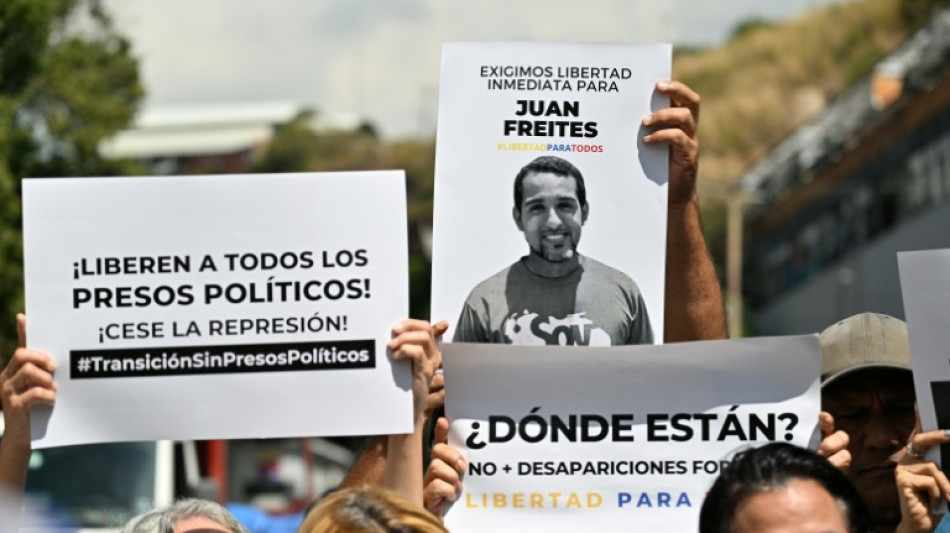
Venezuela says over 600 prisoners released; families' patience wanes / Photo: Juan BARRETO - AFP
Venezuela's interim president Delcy Rodriguez said Friday that over 600 inmates have been released, far more than estimated by rights groups, who are demanding the liberation of all political prisoners.
Days after the US ouster of socialist leader Nicolas Maduro in a January 3 bombing raid on Caracas, the government undertook to release a "large number" of the hundreds of Maduro opponents languishing in prison.
The announcement, which was hailed by Washington, created expectations of large groups of prisoners walking free.
But the releases have taken place in dribs and drabs.
Rodriguez said 626 prisoners have been released since December and said she would ask the UN High Commissioner for Human Rights to verify the number.
"Enough with the lies," she exclaimed, alluding to the figures issued by rights groups.
Foro Penal, a leading Venezuelan rights group, said it had counted 155 political prisoners released, mostly since Maduro's overthrow, and estimated that over 700 people were still being held.
Outside the notorious Helicoide intelligence services headquarters in central Caracas that NGOs say is a torture center, prisoners' families have been growing increasingly agitated at the drip-feed of releases.
Adriana Abreu wore a t-shirt with the image of her husband, Guillermo Lopez, a activist from opposition leader Maria Corina Machado's party who was detained two years ago.
"Unfortunately, Guillermo is missing out on the life of our son, who is only four years old," she said through tears.
Maduro and his wife were Cilia Flores were snatched from a military base in Caracas and flown to the United States to face trial on drug trafficking charges.
- 'The oil is ours' -
Maduro was succeeded by his vice president Rodriguez, whom US President Donald Trump backed to take over, provided she gave Washington access to Venezuela's rich oil deposits.
This week he praised her leadership as "very strong" and said the United States was set to "become richer" after taking a cut of Venezuela's crude.
Reforms designed to revive the Caribbean country's moribund economy have been coming thick and fast.
On Thursday, lawmakers gave their initial backing to plans to throw open the oil sector to private investors, paving the way for the return of US energy majors.
On the streets of Caracas, however, supporters of Maduro have continued to stage near-daily demonstrations for his release.
On Friday, thousands of supporters of "chavismo" -- the fiercely anti-US, socialist doctrine pioneered by Maduro's predecessor and mentor Hugo Chavez -- marched through the city.
Marlene Blanco, a 65-year-old accountant, was particularly critical of Trump's grab for Venezuelan oil.
"The oil is ours, and it has to be bought at the right price," she declared.
L.Sastre--MP