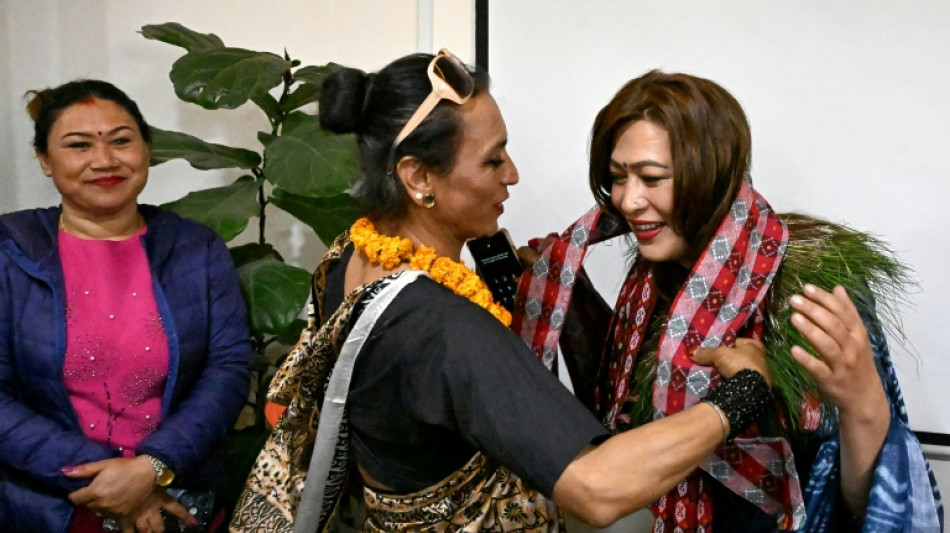
Nepal welcomes first transgender lawmaker / Photo: Prakash MATHEMA - AFP
Draped in garlands, Bhumika Shrestha on Monday became Nepal's first transgender woman lawmaker, marking a proud milestone for the marginalised community in the Himalayan nation.
Nepal's Election Commission confirmed the 37‑year‑old as a proportional‑representation MP from the centrist Rastriya Swatantra Party (RSP) which won a majority in parliament with 182 seats last week.
"I am very excited but also feel the responsibility on my shoulders," Shrestha, an LGBTQ rights advocate, told AFP.
"Our constitution has provisions for our community but they have not translated to laws and policies. Our community expects me to raise our issues (in parliament)."
Shrestha will sit in the 275‑member House of Representatives elected on March 5, the first election since the deadly anti-corruption protests toppled the government in September last year.
RSP, led by rapper‑turned‑politician Balendra Shah, won 125 of 165 directly elected seats and secured 57 more through proportional representation, leaving it just two short of a two‑thirds majority.
Umisha Pandey, president of the Blue Diamond Society (BDS), a leading LGBTQ rights group, called Shrestha's election a "historic" moment.
"Our pains, our sufferings, our feeling, our stories and our every problem is only understood by us, not by others," said Pandey.
Supporters gathered at the BDS office in Kathmandu to congratulate Shrestha, offering her scarves, flowers and gifts, including a pen symbolising the legislative power she will now wield.
Nepal has some of South Asia's most progressive laws on LGBTQ rights.
It outlawed discrimination based on gender or sexual orientation in 2007. A third-gender category for citizenship documents was introduced in 2013, and passports with an "others" category followed in 2015.
In 2023, an interim order from the Supreme Court allowed same-sex and transgender couples to register their marriage.
But no one from the community has held public office since 2008, when an openly gay man became a lawmaker, nominated under the proportional representation system.
More than 900,000 people in Nepal identify as sexual minorities, according to BDS.
D.Johannsen--MP