Moroccans ejected from Spain's Ceuta lament 'broken dreams' / Photo: JORGE GUERRERO - AFP
 18°C
18°C

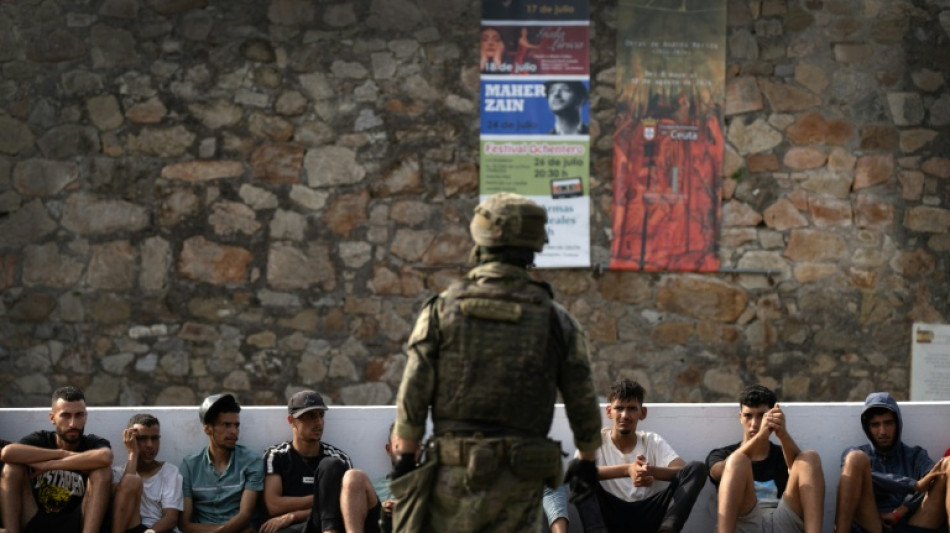
As thousands of Moroccans who forced their way into the Spanish enclave of Ceuta this week were returning home, many did so with their dreams broken and newly convinced that reaching Spain was not worth the risks.
Mohamed Nias, a 23-year-old fruit seller from Tangier, was returning from his second attempt in five years at getting to Spain.
He told AFP he'd gone "in search of a better life" but found "nothing but suffering and racism" and complained that he had been unable to find any food for two days in the Spanish city after swimming to reach it.
"Never come here, you'll only suffer," he warned those who might follow in his footsteps.
On Saturday, Moroccan authorities continued to remove people by coach, having begun their efforts the previous evening, taking them back to their homes.
Mohamed Nias was one of the hundreds of Moroccans who left work in a hurry on Thursday, having "heard that the border with Ceuta was open".
That rumour was amplified by social media and the sharing of images showing hundreds of youths celebrating their entry into the territory.
The Spanish government has also blamed misinformation about a recent supreme court ruling on migration.
- 'Mistreated' -
According to witnesses spoken to by AFP, thousands of people who flocked to the border town of Fnideq were not stopped by the authorities, even as they approached the frontier across wooded hills.
"There were ordinary gendarmerie checkpoints on the roads, but not an exceptional deployment," a source close to the removal operations told AFP.
The authorities "could not stop crowds that huge", the source said.
Experts familiar with Morocco's security apparatus expressed puzzlement at the absence of reinforcements from the police or the powerful military, even as migrants began pouring into Fnideq at the start of the week.
Nias, accompanied by a friend, passed through the Moroccan gendarmerie checks on the road to the town of just 70,000 inhabitants without difficulty "in a commercial truck".
Once on Spanish territory, they were intercepted by Spain's Guardia Civil gendarmerie at sea but managed to escape.
In the city of 80,000 people, however, they did not receive the welcome they had expected.
Shops were closed and many locals reacted with anger, they said.
"They mistreated us, some chased us with sticks, they were racist. I spent the night in a forest -- it was hell."
Sadi Tribak, a 38-year-old artisan from Tangier, drove to Fnideq with his children as soon as he heard the rumours about the open border.
When he discovered that people were swimming across the frontier, he said, he took his children back home then returned alone to swim himself.
"I was deceived. I thought they would welcome us well, but there was nothing to eat and they did not accept card payments."
Tribak has a job in Morocco, but he thought that working in Spain would "give a better future to my children".
- 'Nowhere better than Morocco' -
Morocco is experiencing an economic boom, with growth of five percent in 2025, but strong inequalities remain while Spanish GDP per capita is around eight times that of Morocco's according to World Bank figures.
Ayoub El Abied, 16, was among the many young Moroccans who headed to Ceuta. A good student back home, Spain to him means "freedom" and a chance to escape Morocco's crushing unemployment.
He mistakenly believed that as a minor, he wouldn't be turned back.
Youssef, a 27-year-old lifeguard, was turned back from Ceuta with a group of friends. "In the end, there's nowhere better than Morocco," he said, decrying their "bad experience" on the other side of the border.
The people of Ceuta were "racists", he said, complaining that he "spent two days without eating".
"They closed their shops to starve us," he claimed, as a small crowd around him chanted "long live Morocco, long live the king".
The Confederation of Businesses of Ceuta had advised shops and other commercial establishments to remain closed "until security can be guaranteed".
Abdelouahed Fetachi, originally from Morocco's capital Rabat, three-and-a-half hours away, likewise found himself without anything to eat.
"Everyone is going back. I wouldn't advise anyone to come. We had a dream but they broke it," the aluminium joiner said, adding he would return to work on Monday,
His sentiments were echoed by Rachid Aouchari, a 32-year-old without work, who said he would be relieved to return home.
"I just want to see my kids."
L.Gschwend--MP