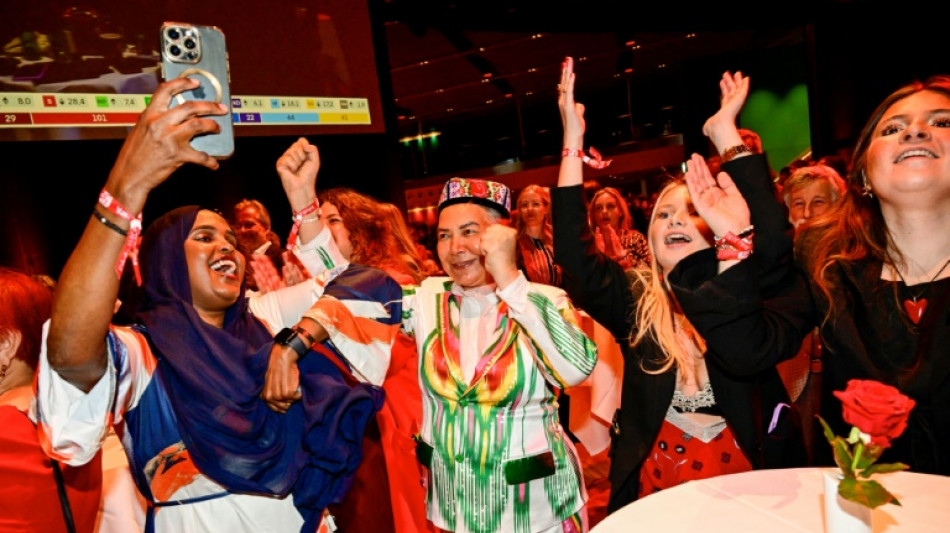
Swedish left-wing cheers far-right decline amid tight election race / Photo: Jonas EKSTROMER - TT NEWS AGENCY/AFP
 15°C
15°C
Quiet enough to hear a pin drop. Then, thunderous applause and shrieks of joy erupted at the Swedish Social Democrats election party on Sunday as supporters celebrated the far-right's predicted drop in support from early counting.
The election result was too close to call, but it looked increasingly clear that the far-right Sweden Democrats, which first entered parliament in 2010, were en route to lose ground for the first time.
"I find it very heartening," 24-year-old Magnus Bjerg Sturm told AFP at the Social Democrats party at a Stockholm conference centre.
"I have the impression that they peaked in the last election and now people are sort of tired of them," said the think tank employee.
A hubbub filled the room, bathed in pink-red light, mirroring the party's red rose emblem.
Roses are placed on the tables where supporters nibbled from snack plates, hugged, all smiles, and sipped from glasses of sparkling wine or beer.
— 'Very close' —
"I feel like the winds have changed, especially among young men," Sturm said, noting that the far right's mistake was to "go so far on Islamophobia" in the election campaign.
Far-right proposals to ban the veil in public, or claims -- as by party leader Jimmie Akesson in an interview with public broadcaster SVT -- that Swedish Muslims could not be both practising and Swedish, failed to resonate with voters.
On the contrary: "That's where I think Sweden stands out. Swedes aren't particularly racist deep down," Sturm said.
But expressions turned to anxiety and caution reigned, as the vote count progressed and the left-wing bloc's lead began to shrink.
"I know very well it's likely to be extremely close," admitted Camila Salazar Atias, a 54-year-old criminologist whose work focuses on Sweden's organised crime networks and their grip on society.
She agreed that something had changed in the country over the past four years.
"Many people don't agree with deporting teenagers. This humanism that has made Sweden famous and is its core value," she explained.
The joy faded as vote counting showed the left and right blocs neck-and-neck.
Some supporters tried to keep their spirits up by singing.
Emilia Wikstrom Melin wanted to remain optimistic.
Ultimately, the most important thing is to have a government "that shows more humanity", more "inclusive than the previous one, which was more divisive."
A.Schneider--MP