'High hopes' as Indonesian women get a football league, again / Photo: BAY ISMOYO - AFP
 7°C
7°C

Seven years after Covid-19 put the brakes on Indonesia's new women's football league, Zahra Naqiyyah will finally return to the field with "high hopes" for the women's game in the country.
Sunday's matches in the Indonesia Women's League will be the first since 2019 and a new chapter for women's football in the Muslim-majority country of 290 million people.
"I really believe that if Indonesia's women's football is properly managed we can become a powerhouse in Asia," Zahra told AFP at a training session in Bekasi city, east of Jakarta.
"I have high hopes for women's football in Indonesia," she added, wearing a black hijab and the turquoise jersey of her club, Garudayaksa Women.
Indonesia has long been an outlier among football nations, including much smaller Asian ones, in not having a permanent league for women.
But in 2019 the IWL was launched and Zahra, only 15 at the time, helped her team to victory and celebrated with a hero's parade in her home city of Bandung -- fulfilling a dream.
But the league managed only one season because of the pandemic and subsequent financial problems, and has been on hold ever since.
Now, the Football Association of Indonesia (PSSI) has allocated 24 billion rupiah ($1.3 million) to restart the league and pay salaries, albeit small ones, to players.
There will be six clubs to start with in a five-year trial period, according to PSSI chairman Erick Thohir, former owner of Inter Milan.
At 22, Zahra is still young enough to make a career of it. Others were not so lucky.
"Many of my friends ended up quitting because what else could they do? There is no league. And if they want to become coaches, who are they supposed to coach?" said Zahra.
- 'Going slowly' -
While she learnt to be a coach, others tried their luck with clubs abroad.
Nastasia Suci Ramadhani played last year in the Maldives.
The 20-year-old returned to Indonesia in January to play alongside Zahra.
Unsure about the league's staying power, Nastasia is studying management at university and has also considered becoming a police officer or soldier.
"For men there's a league every year, but for women there isn't," she said.
Garudayaksa coach Yopie Riwoe said the going will be tough if Indonesia wants to compete with top Asian nations.
Japan won the Women's World Cup in 2011 and are current Asian champions, while China and South Korea also boast women's leagues and are competitive at international level.
In contrast, Yopie said of Indonesia's women: "All this time they haven't done continuous training like daily sessions with high intensity, so it's been a bit difficult.
"We're trying to go slowly."
Indonesia's women have never been to the World Cup and failed to qualify for the Asian Cup last year, though they did reach the continental showpiece in 2022, losing all three games.
However, they won the regional ASEAN Football Federation Women's Cup in 2024 and again this year.
They are currently ranked 105 in the world.
- 'An athlete first' -
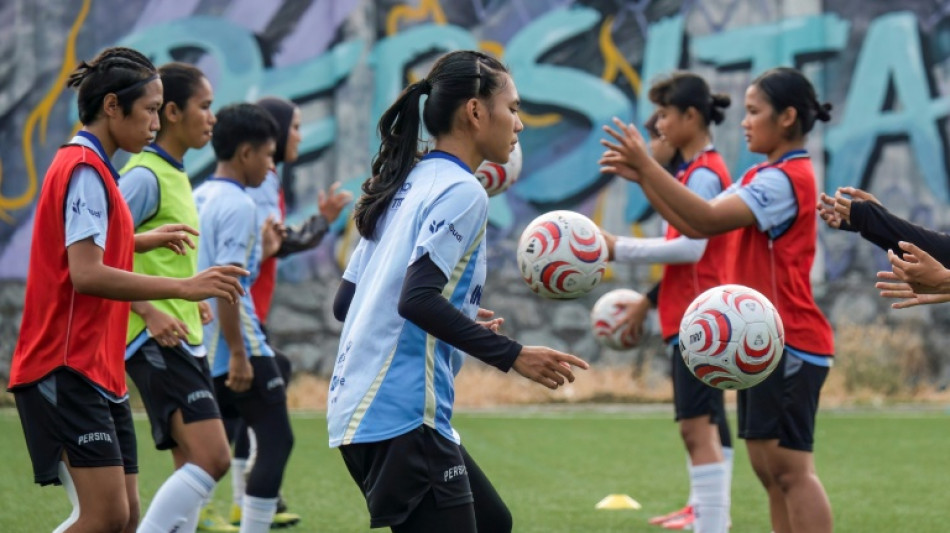
Hoping to join the national side one day, Azra Zifa Kayla will play in the IWL for Persita Women, based west of Jakarta.
The 22-year-old will juggle afternoon practice with mornings teaching physical education to primary school pupils, afraid to stake everything, including a regular salary, on her passion for football.
"I am an athlete first," she said on a football field in Tangerang, near the capital.
"But to be an athlete -- especially as a woman in Indonesia -- can be limiting.
"I should also focus on education because that’s the guarantee of my future," said Azra, who studied health and sport science.
The IWL returns with about 200 players from clubs all from Greater Jakarta.
IWL boss Teddy Tjahjono told AFP the long-term goal was to create a sustainable women's football industry.
"If the industry is strong, then financially it will be good for the clubs, for the players and for the entire support system around women's football, which will also continue to improve," he said.
M.P.Huber--MP