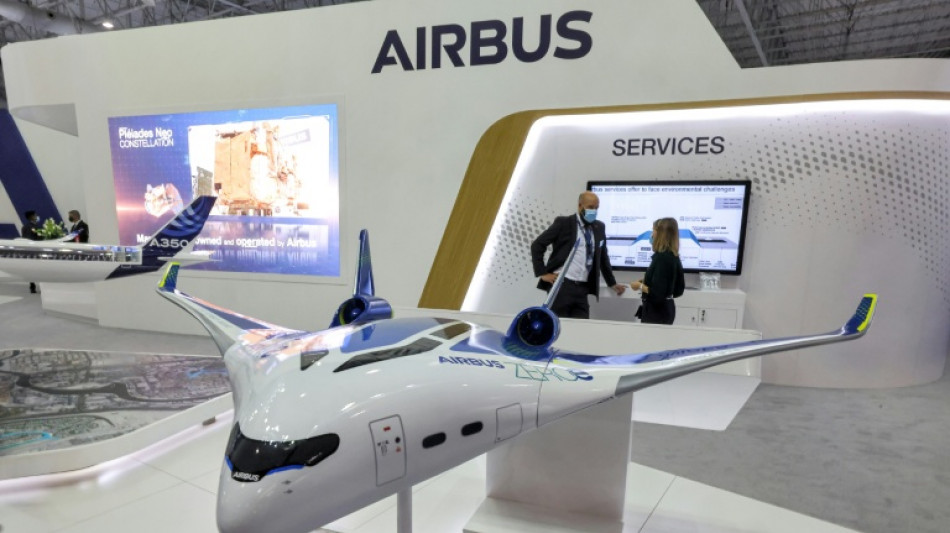
Hydrogen planes 'more for the 22nd century': France's Safran / Photo: GIUSEPPE CACACE - AFP
 10°C
10°C

Hydrogen-powered airplanes, touted by some as a way to slash carbon emissions from flying, are unlikely to prove a viable technology anytime soon, the head of French engine maker Safran said Wednesday.
"Hydrogen in aviation is more for the 22nd century," Olivier Andries told a French parliament committee.
Pan-European planemaker Airbus has been working for years on putting a hydrogen plane into service in the 2040s, but acknowledged last year that progress had been slower than expected.
Burning hydrogen only produces water, which is why the aviation and automobile industries have looked at it as possibility to eliminate greenhouse gas emissions from travel.
Safran, a major engine supplier to both Airbus and Boeing, already has engines that can be fuelled with hydrogen, Andries said.
But liquid hydrogen, even at -253 degrees Celsius (-423 F), takes up four times as much space as kerosene, which is what planes use at present.
That makes it impossible to use with current plane designs, while requiring billions of euros of investment in hydrogen storage infrastructure at airports worldwide.
"You cannot only come up with ideas that are incompatible with today's ecosystem," Andries told lawmakers.
He also cast doubt on calls to impose limits on flying to curb emissions, as the air transport sector aims to cut its 2005 pollution emission levels in half by 2050.
More than five billion people travelled by plane last year, he said, and revenue for the global airline industry is already 20 percent higher than pre-Covid levels.
"The trend is very strong, whether you like it or not," he said, citing as an example India's rapidly emerging middle class which "yearns to fly".
"Are environmental concerns having an impact on global air traffic growth? I'm not seeing it," he said.
R.Schmidt--MP