Octopuses Use Multi-Step Process to Squeeze Through Tiny Spaces

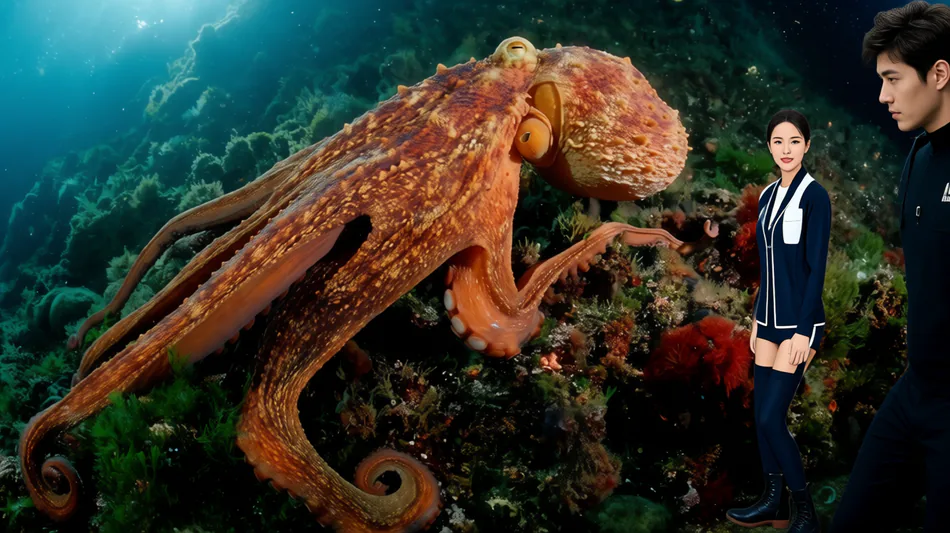
A recent study published in the Journal of Experimental Biology reveals that octopuses employ distinct multi-step processes to squeeze through openings smaller than their body diameter. Researchers observed juveniles of the common and Maya octopus species using a specific four-step sequence for tight gaps, a finding that could inform the development of soft robots capable of navigating disaster debris.
Researchers have identified a complex, multi-step mechanism that octopuses use to force their bodies through openings significantly smaller than their own diameter, a discovery that may aid in the engineering of soft robots for confined environments.
The findings, detailed in a study published in the Journal of Experimental Biology, challenge previous assumptions about cephalopod movement. Prior to this research, there was no documented information on how these animals navigate gaps far narrower than their body width.
Wen-Tzu Hsing, the study’s first author, noted in a press release that the investigation filled a significant gap in biological understanding. The research team constructed an experimental tank divided by a transparent acrylic panel featuring a central hole. This setup allowed researchers to observe octopuses moving from one side to the other while classifying the openings as either large or small.
The classification depended on whether the animal had to compress the stiff cartilage structure protecting its central nervous system. Researchers estimated this threshold by measuring the distance between the octopuses' eyes.
The experiment revealed that octopuses alter their approach based on the size of the gap. When facing larger openings, the animals utilized a three-step process. First, they explored the hole with their arms. Next, they typically inserted two arms through to the other side. Finally, they threaded the remaining arms and mantle through the opening, often using suckers to grip the barrier for increased leverage.
However, when presented with smaller holes, the octopuses switched to a distinct four-step sequence. While the initial stages remained similar, with several arms threading through the opening, the subsequent movements diverged significantly.
For tight spaces, the octopus rotated its body upward and pushed the bases of the already-passed arms deeper into the hole to widen the passage. From this position, it twisted and stretched its arms to feed all appendages through. Once every limb was on the other side, the animal slid its head through, again using its tentacles against the barrier for leverage.
Analysis of 30 successful attempts showed that the octopuses never employed the four-step sequence when the hole was large. Side-view footage confirmed that during the final stage of navigating a small opening, the octopus deforms its mantle to reduce its diameter. The animals also demonstrated a preference for specific arms during various stages of the process.
The experiments were conducted using juveniles from two species: the common octopus and the Maya octopus. Consequently, researchers do not yet know if these specific processes apply to all octopus species.
Beyond biological interest, the team suggests these findings have practical applications for robotics. In disaster scenarios where passageway sizes are unpredictable, search-and-rescue robots must be designed to fit through the narrowest possible debris gaps. Currently, many such robots adopt a long, slender, snake-like shape to achieve this flexibility.
However, miniaturization often reduces the space available for sensors and operational capabilities. The researchers hope to apply insights from the octopus’s contortion techniques to improve the control and design of soft robots intended for searching disaster debris or exploring difficult terrain.
S.Schuster--MP