Mumbai region records five-year high in post-monsoon python rescues

Wildlife rescuers have handled 19 Indian rock pythons across the Mumbai metropolitan region since October, the most for the period in five years.
Wildlife rescuers have handled 19 Indian rock pythons across the Mumbai metropolitan region since October, the most for the period in five years.
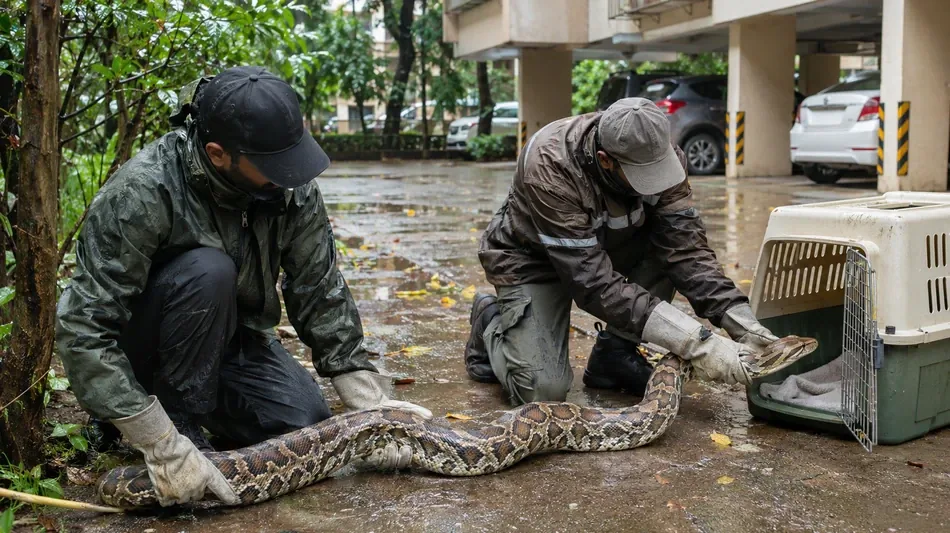
Wildlife rescuers have collected 19 Indian rock pythons across the Mumbai Metropolitan Region since October, the highest post-monsoon total for the species in five years. Eleven were found in Mumbai, with four each in Navi Mumbai and Thane.
One python was seen entering a grotto in Pali Village, Bandra, around midday on Tuesday. The Resqink Association for Wildlife Welfare said it had received at least 48 calls or reports of sightings in the preceding week, although snakes often moved away before a rescue team arrived. The organisation has handled more than 233 Indian rock pythons in the region since 2021.
RAWW founder Pawan Sharma said unseasonal rain in late October and sharp changes in temperature might have interrupted brumation, the winter period of reduced activity among cold-blooded animals. Herpetologist Varad Giri said the species is normally active during the monsoon and dormant in winter. Warmer, wetter conditions could encourage hunting or mating behaviour and cause hormonal changes.
Habitat pressure may be another factor. Atul Kamble of the Wildlife Animal Protection and Rescue Association cited the loss of urban forest and mangrove habitat and construction in areas including Bandra Kurla Complex and Mulund. Noise and vibration from transport and construction can also disturb snakes sheltering underground.
Kamble said reduced permeable ground and heavier runoff were causing drainage networks to flood, potentially forcing wildlife out of those systems. He also noted that residents increasingly contact trained rescuers rather than attacking snakes.
The Indian rock python is protected under Schedule I of Indian wildlife law, giving it the same legal protection category as the tiger. Conservationists say more research is needed on how the species is adapting to urbanisation, and RAWW plans to propose a study to the state forest department.
A.Kenny--MP